Founding florist
Tulipanna
Bondi NSW · est. 1992
A Bondi Road florist since 1992, with seasonal bouquets, arrangements, roses and potted orchids, and a weekly note on what's at market.
Seasonal cut flowerDianthus caryophyllus
In season now (November 2026): Yes in every state
Carnations are within the listed Australian season in November. The national season is all year. Local growing conditions and supply can change the timing. Check the state guide below and ask your florist about locally grown stems before ordering, especially near the beginning or end of the season.
Add to a florist brief Find seasonal alternatives
Written by Dan d'Auvergne
Flowers and pets: check before bringing a bunch home
Season months drafted from koch.com.au, livingflowersmelbourne.com.au, figandbloom.com, abc.net.au. Availability varies by grower and region. See sources
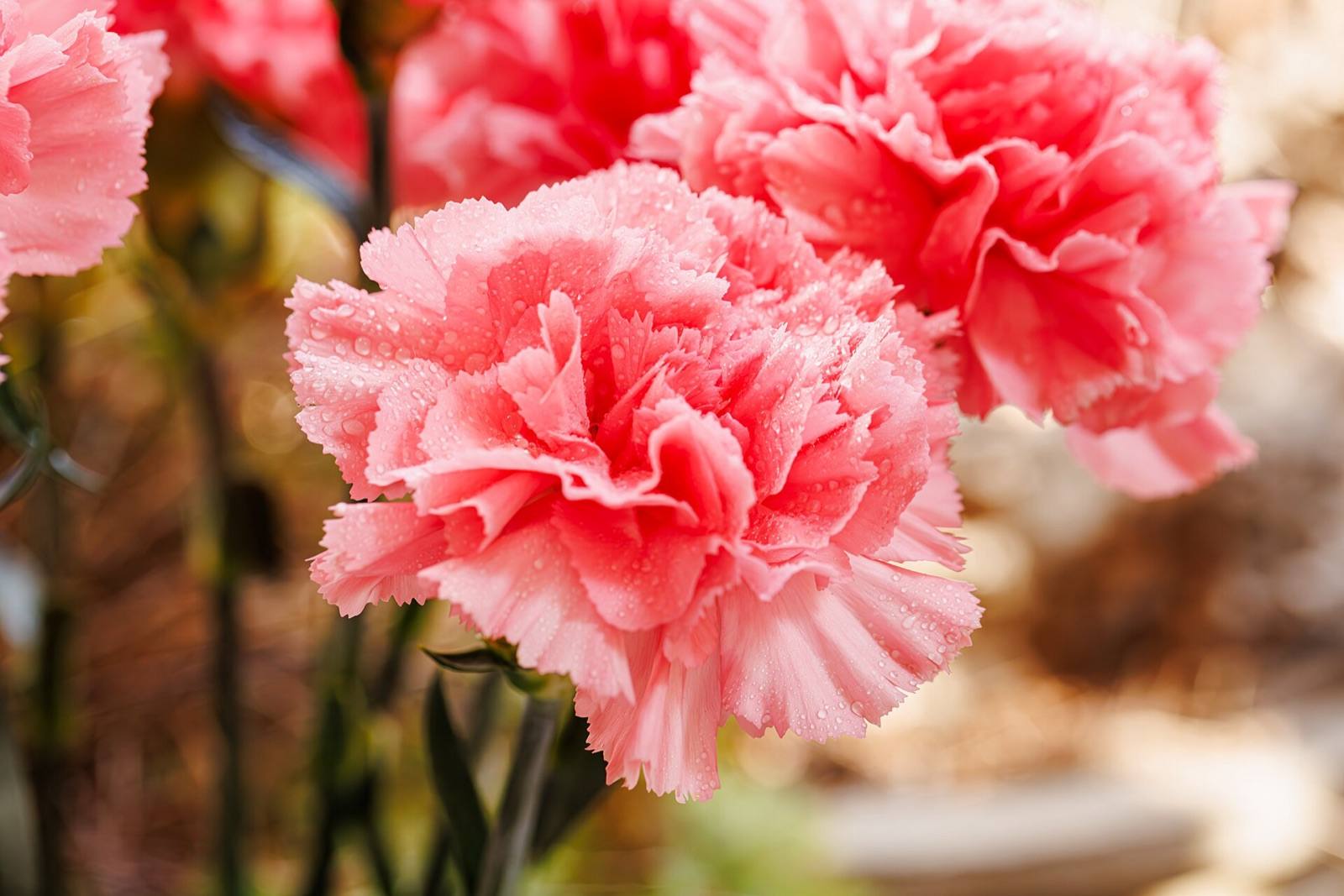
Carnations are available year-round in Australia from glasshouse and field growers, topped up by imports. Carnations, along with roses and chrysanthemums, are among the biggest imported flower lines, mostly from Colombia, Kenya and other large exporters. They are one of the longest-lasting cut flowers, often going two weeks or more, and come in an unusually wide colour range including green, khaki and many bi-colours. Standard, spray and Sweet William types are all common at market.
One of the most affordable flowers at market, sold by the bunch all year.
Look at the calyx, the green cup at the base of the flower. It should be firm and unsplit, because a split calyx lets the petals spill out sideways. Stems should feel stiff and snap cleanly, and the grey-green leaves should show no yellowing. On sprays, count the buds still to open, as that is where the extra days come from. Smell them too. Some carnations still carry a clove scent, while many modern commercial types have almost none. A bunch of ten standards fills a medium vase. They are good value in any month, so buy whenever the colour suits.
Bondi NSW · est. 1992
A Bondi Road florist since 1992, with seasonal bouquets, arrangements, roses and potted orchids, and a weekly note on what's at market.
Carnations are not native to Australia, but they're grown here commercially.
Carnations have been a glasshouse crop in Australia for decades. Local stems come from covered, often hydroponic, operations in Victoria, South Australia, Western Australia and New South Wales, with Victoria the largest producer. Much of Victoria's cut-flower growing sits around Melbourne and in the Wimmera. The farms are specialist commercial growers that pick to a steady weekly schedule, not seasonal flower farms. A large share of the carnations sold here is now imported, mainly from South America and Africa, so ask your florist if you would prefer Australian-grown stems.
Florists top up local supply with imported stems, mostly from Kenya, Colombia, Ecuador, Malaysia and China. Ask your florist which you're buying: local stems are usually fresher and have travelled less.
Colours
Varieties to ask for
Vase life
8 to 20 days
Making them last
Carnations are the workhorse of a mixed vase and suit any season. In summer pair them with sunflowers or lisianthus, in winter with tulips or anemones, and all year with roses, chrysanthemums and eucalyptus. They look most modern massed in one colour, cut short and packed into a low bowl or wide tumbler so the heads touch. Standards open slowly from a ruffled cup to a full round head over several days, and sprays keep opening side buds. Green and khaki types are handy for mixing with natives.
Traditionally a symbol of fascination and love, with pink carnations linked to a mother's love.
Carnations are a traditional birth flower for January.
Flemington
Best months: all year
Epping
Best months: all year
Carnations are available all year in Australia. Local glasshouse and field growers supply them year-round, and imports fill the gaps, so you can buy them in any month.
Because of Anna Jarvis, who founded Mother's Day in the United States. She sent 500 white carnations to the first service in 1908, as they were her mother's favourite flower. In Australia chrysanthemums are the traditional choice, but pink carnations still carry the meaning of a mother's love.
Carnations are one of the longest-lasting cut flowers, usually eight to twenty days depending on the variety. Keep them away from fruit and change the water every few days.
Carnations are one of the biggest imported flower lines in Australia. ABC News reporting names Colombia, Kenya, Ecuador, Malaysia and China as the main sources of imported cut flowers. Ask your florist if you want Australian-grown.
The ASPCA lists carnations as mildly toxic to cats and dogs. Chewing the leaves or petals can cause mild vomiting or diarrhoea, and the sap can irritate skin. It is rarely serious, but keep vases out of reach and talk to your vet if your pet seems unwell after eating any.